

The Huguenot Street Story: Walking Down 330 Years of American History |
Uncover the untold tales of resilience and legacy on Huguenot Street - where American history comes alive. |
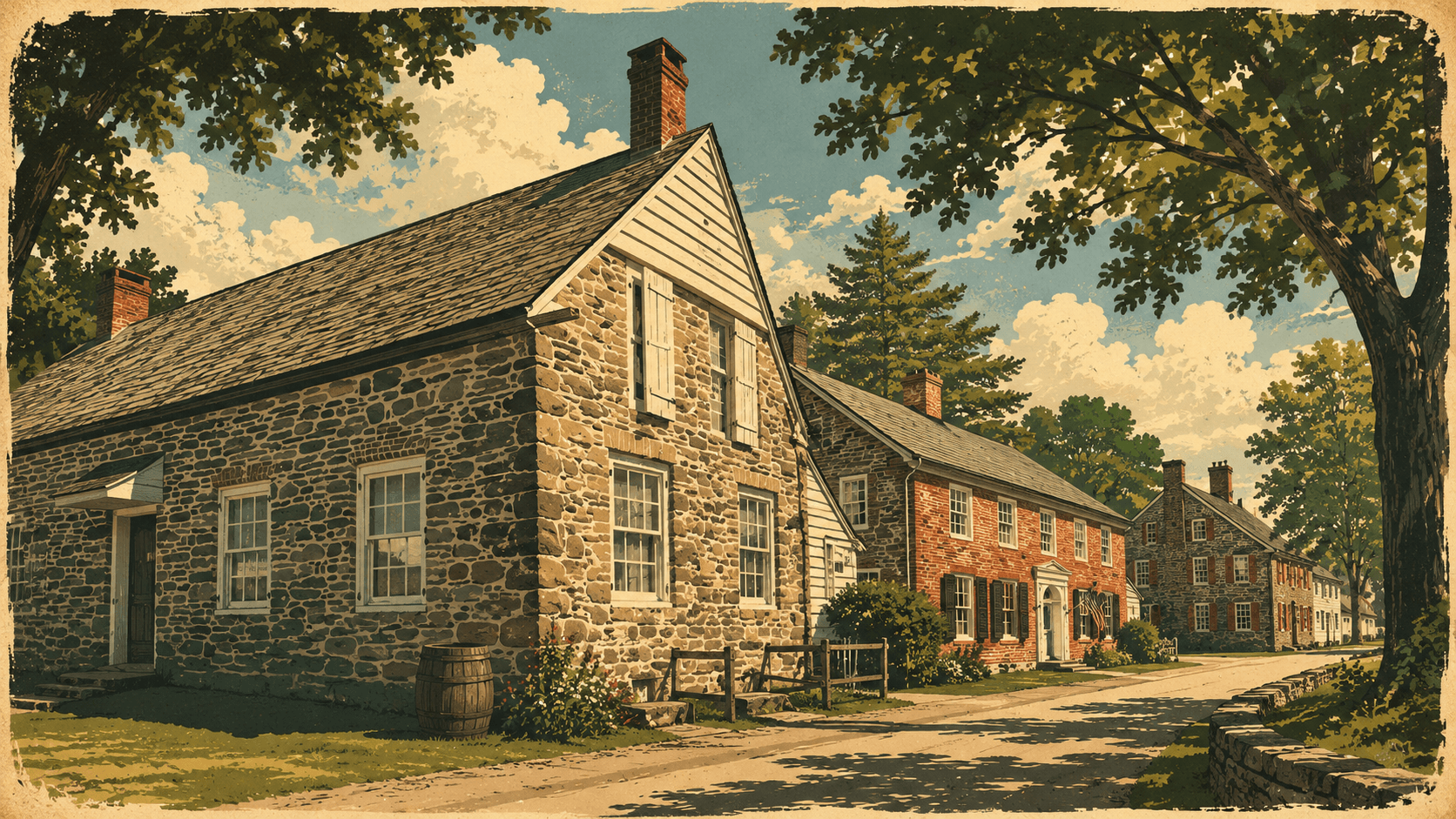
There's a moment when you walk down Huguenot Street where you stop noticing the parking lot behind you and the power lines above you, and you just see the stones. Seven stone houses, built from quartzite pulled out of the ground a few hundred feet away, sitting on the same footprints they were laid on three and a half centuries ago. No reconstruction. No replica. These houses have had people living in them — cooking, arguing, raising children, burying their dead — continuously since the late 1600s.
It's the kind of place that doesn't feel real until you're standing in front of it.
Who Built It and Why
In 1677, a group of French Huguenots — Protestants who'd been fleeing religious persecution in France for decades — crossed the Atlantic and made their way up the Hudson. They purchased land from the Esopus Munsee people and started building. The houses they raised were meant to last. Thick stone walls, small windows to keep out the cold and any threat, a central chimney that anchored the whole structure. They were practical, fortified, and stubbornly permanent.
What makes Huguenot Street hard to sit with, though, is the full history. The settlement was built on land that had been lived on for thousands of years before the Huguenots arrived. And the people who built and maintained these houses included enslaved Africans whose labor is part of the walls you walk past. Historic Huguenot Street doesn't flinch from any of it — the tours tell you the whole story, and they should.
What You'll See
Historic Huguenot Street preserves seven stone houses as a living museum, and it's a National Historic Landmark District for good reason. Guided tours take you inside the DuBois Fort — you can feel the weight of the 1728 walls around you — and the Jean Hasbrouck and Abraham Hasbrouck houses, where the craftsmanship and the centuries both press in on you at the same time. You look at the hand-hewn beams and the fireplaces big enough to stand in, and you think about the hands that shaped them.
The adjacent cemetery is quieter than you'd expect. Eighteenth-century graves, some worn almost smooth. I stood there once and could hear the village behind me — people talking, car engines, a dog barking — and it made the weight of the place hit harder, not less.
Give Yourself the Hour
Walk the half-mile stretch of Huguenot Street at your own pace, the houses are close enough together that the whole thing unfolds like a sentence. Let the interpretive signs do their job. If you can catch a guided tour, do it; the docents know things you won't get from a placard. An hour will do it. Two if you let yourself slow down.
There are a lot of reasons to visit New Paltz. This is the one that stays with you. |


0 Comments
Join the conversation
Be the first to comment
Share your thoughts above.