

Why New Paltz Needs a Student-Focused Co-Working & Study Space |
7,898 students, cramped dorm rooms, and a downtown with nowhere to plug in — there's a $100K opportunity hiding in plain sight |
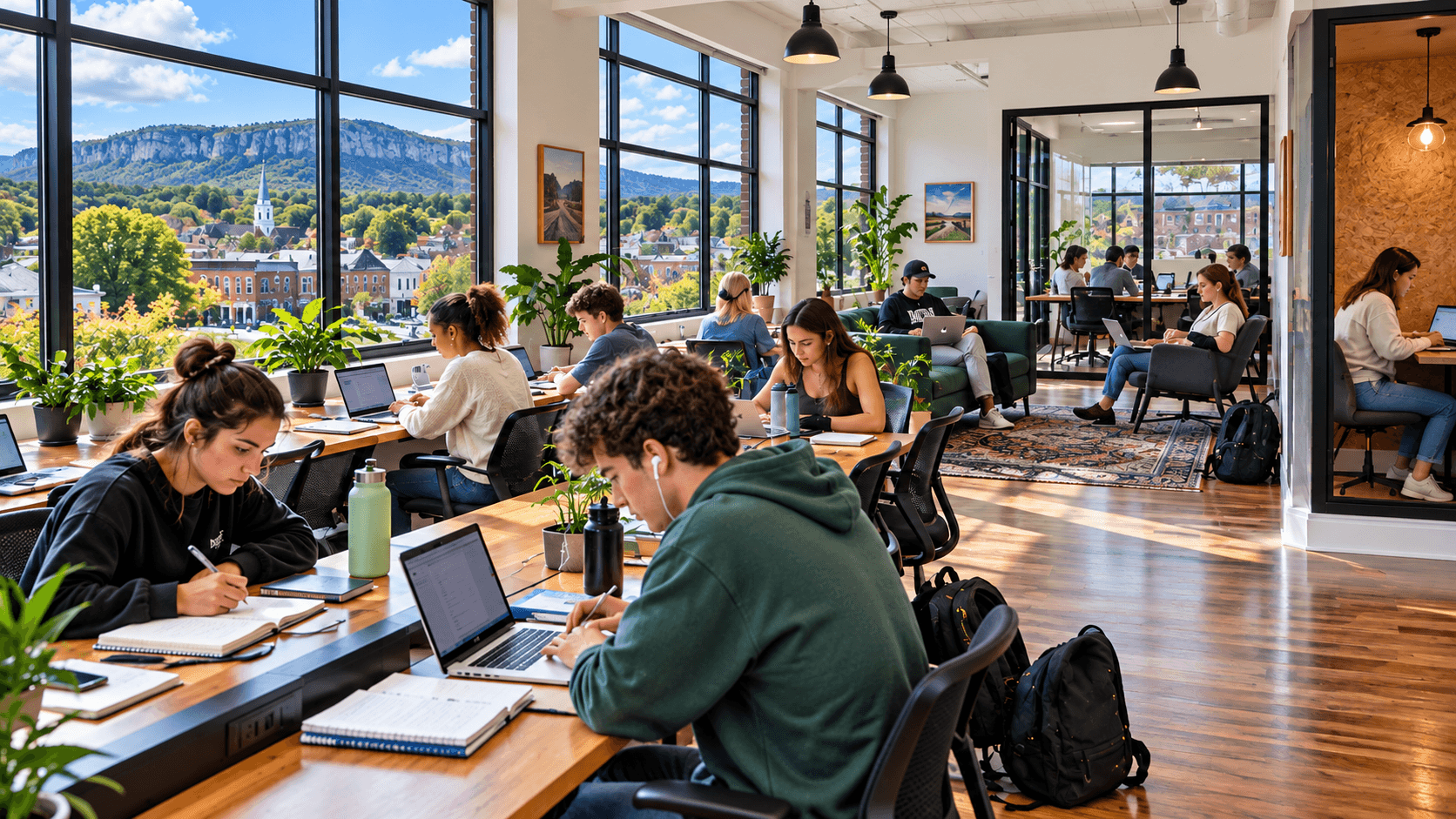
Walk through the SUNY New Paltz campus during midterms or finals week and you'll see students camped in every available corner — the library overflow rooms, the student union couches, even the hallway benches near electrical outlets. Off campus, the picture is the same: renters in small apartments with no home office, commuters between classes with nowhere to settle, and a growing population of remote workers and freelancers who've moved to the area for the lifestyle but lack a professional workspace.
New Paltz doesn't have a dedicated co-working space. And with the town's unique demographics, it should.
7,898
Students Enrolled at SUNY New Paltz (2024-2025)
The Demand Is Already Here
Students Without SpaceOnly 20.3% of New Paltz residents own their homes. Most students live in rental housing — often shared apartments with no quiet study area. The campus library, while solid, fills to capacity during peak academic periods. Coffee shops on Main Street get packed by 10 AM on any given weekday. Students need a third space between their apartment and the classroom.
The Remote Work WaveNew Paltz has attracted a wave of younger professionals and freelancers since the pandemic — people who chose the Hudson Valley lifestyle over a city cubicle. Many work remotely part-time or full-time but lack a dedicated home office. A co-working space gives them professional infrastructure without a long lease.
Graduate Students and ResearchersWith 1,036 graduate students enrolled, there's a cohort that needs extended study hours, quiet collaboration rooms, and reliable high-speed internet — things that crowded campus facilities can't always provide during crunch time.
What the Space Would Look Like
Hot Desks: 20-25 open workstations with monitors, power outlets, and USB charging. Available by the hour, day, or month. Student rate: $5/hour or $60/month.
Private Pods: 4-6 sound-insulated pods for video calls, online classes, or focused work. Bookable in 30-minute blocks.
Collaboration Rooms: 2-3 meeting rooms with whiteboards and screens for group projects, study sessions, or small team meetings.
Amenities: High-speed WiFi (1 Gbps), printing and scanning, coffee and tea bar, snack vending, and a small lounge area. Open until midnight during exam weeks.
Startup Costs: What It Takes to Launch
Initial Investment Breakdown
Total Estimated Startup Cost: $95,000 - $115,000
Revenue Model That Works
Membership tiers: Student monthly ($60), community monthly ($120), premium with 24/7 access ($180). Day passes at $15. Meeting room rentals at $25/hour.
Conservative projections: At 40 members in year one (mix of students and professionals), monthly revenue reaches approximately $4,000-$5,000. By year two with 70+ members and meeting room income, monthly revenue climbs to $7,000-$9,000. Operating costs (rent, internet, utilities, supplies) run approximately $3,500-$4,500/month.
Break-even: 14-18 months, with profitability accelerating as the member base grows and word-of-mouth spreads across campus.
Why New Paltz Specifically
No direct competition: The nearest co-working spaces are in Kingston and Poughkeepsie — both a 20-30 minute drive. New Paltz's walkable downtown is the natural location.
Built-in community: SUNY New Paltz creates a constant pipeline of new users every semester. Partner with the university's career services, entrepreneurship programs, and graduate departments for referrals.
Low overhead model: A co-working space doesn't need prime retail frontage. A second-floor space with good internet and natural light works perfectly — cutting rent costs significantly.
Community events: Host workshops, networking nights, study groups, and freelancer meetups. The space becomes a hub, not just an office — building loyalty and filling seats during off-peak hours.
The Bottom Line
New Paltz has the density of students, the remote-work population, and the lack of competition to make a co-working space thrive. The startup costs are modest compared to retail or food service, the revenue model is recurring, and the business fills a genuine daily need. For an entrepreneur who understands both the student market and the professional remote-worker demographic, this is a low-risk, high-reward opportunity in a town that's been waiting for it.
|



0 Comments
Join the conversation
Be the first to comment
Share your thoughts above.